
What Types of Laser Treatments Do You Offer?
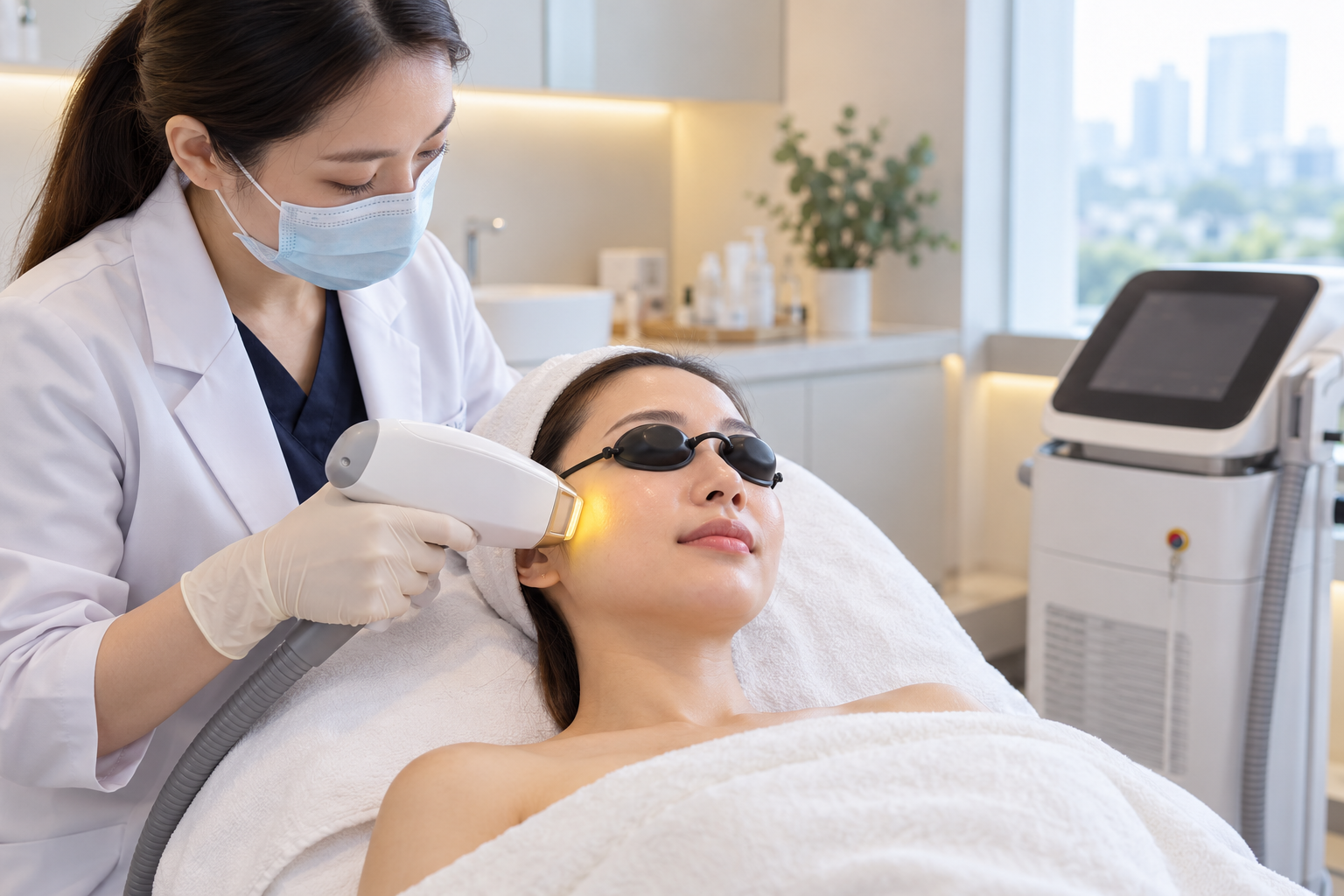
Laser treatments have revolutionized aesthetic medicine, offering precise, non-invasive solutions for pigmentation, active acne, facial redness, uneven texture, and skin aging. At ACTS Clinic, we utilize advanced, FDA-approved laser technologies tailored specifically to your skin type and aesthetic concerns.
Whether you are looking to erase stubborn sun spots, clear persistent breakouts, or achieve an overall radiant complexion, our medical team designs targeted laser protocols to deliver optimal skin health with minimal downtime.
Understanding Our Core Laser Technologies
1. Dual Yellow Laser: Targeted Rejuvenation for Redness & Acne
The Dual Yellow Laser is a unique copper bromide laser system that simultaneously emits two distinct wavelengths: 511 nm (green light) and 578 nm (yellow light).
- The Mechanism: The 578 nm yellow light specifically targets hemoglobin in small blood vessels, gently shrinking enlarged capillaries and destroying acne-causing bacteria (C. acnes). The 511 nm green light targets melanin to brighten skin tone without damaging surrounding tissue.
- The Result: It is exceptionally effective for treating inflammatory acne, facial flushing, rosacea, and vascular melasma. Patients enjoy clearer, calmer skin with zero downtime and minimal discomfort.
- Best For: Sensitive skin, active acne breakouts, facial redness, post-acne erythema (red marks), and vascular-driven pigmentation.
2. Nd:YAG & Pico Lasers: Deep Pigmentation & Tone Brightening
For deeper melanin deposits and uneven skin tone, Nd:YAG laser platforms operate at a 1064 nm wavelength, penetrating into the deeper dermal layers where stubborn pigmentation resides.
- The Mechanism: Using high-peak power and ultra-short pulse durations, the laser energy shatters dark melanin clusters into microscopic dust-like particles. Your body’s natural lymphatic system then naturally metabolizes and clears these particles over time.
- The Result: Fades stubborn dark spots, evens out overall skin tone, and stimulates superficial collagen remodeling for smoother skin texture.
- Best For: Freckles, age spots, sun damage, post-inflammatory hyperpigmentation (PIH), and general skin brightening.
3. Fractional Resurfacing Lasers: Textural Refinement & Scar Repair
When the primary concern is uneven skin texture, enlarged pores, or structural scarring, fractional resurfacing lasers provide deep cellular renewal.
- The Mechanism: The laser delivers microscopic beams of thermal energy into the dermis, creating controlled micro-treatment zones while leaving surrounding tissue intact. This triggers a rapid natural healing response, stimulating fresh collagen and elastin production.
- The Result: Over several weeks, the skin surface reshapes itself, leading to reduced pore size, smoother acne scars, and improved overall skin elasticity.
- Best For: Post-acne scars, enlarged pores, rough skin texture, and fine lines.

Dr. Tan Qian Hui 陈芊卉医生
LCP-Certified Founder and Medical Director at Acts Clinic
About Sculptra Recovery
Have Any Question?
Ready to start on your journey to healthier, more youthful-looking with our aesthetic treatments?
Which Laser Treatment Is Right for You?
Because every skin condition is unique, choosing the right laser depends on your primary skin goals:
- Choose Dual Yellow Laser if: You suffer from active acne, sensitive red patches, broken capillaries, or vascular melasma, and need a gentle treatment with zero downtime.
- Choose Nd:YAG / Pico Laser if: Your main goal is breaking up stubborn dark spots, sun damage, or achieving a brighter, more even skin tone.
- Choose Fractional Laser if: You want to repair post-acne scarring, refine enlarged pores, or smooth out uneven skin texture.
Book Now
Why a Medical Consultation Is Essential Before Laser Therapy
Laser treatments are highly effective, but improper wavelength selection or incorrect energy settings on dark or sensitive skin can lead to adverse effects like hyperpigmentation or burns.
At ACTS Clinic, our certified aesthetic doctors conduct a detailed skin assessment—analyzing dermal thickness, pigment depth, and skin sensitivity—before prescribing a customized laser regimen for safe, predictable, and radiant results.
